What Is the EVO ICL and How Do I Know if It Is Right for Me?
Oct 15, 2026
Hearing that you don’t qualify for LASIK can be discouraging, especially after years of relying on glasses or contact lenses and finally deciding to do something about it.
A thin cornea, a high prescription, or chronic dry eye can all rule out laser vision correction for some people. However, for many of these patients, the EVO ICL offers another path to clear, independent vision. The lens works with the natural structure of your eye instead of reshaping it and is a great option for those who are looking for greater visual freedom.
Keep reading to learn more about the EVO ICL and whether or not it could be right for you.
What Is the EVO ICL?
The EVO Implantable Collamer Lens is a thin lens that a surgeon places inside the eye to correct nearsightedness, with or without astigmatism.
It is made from collamer, a soft material that contains a small amount of collagen and is highly compatible with the body. The lens works much like a contact lens, but it sits permanently inside the eye instead of on its surface. There is nothing to clean, replace, or remember each morning.
The ICL rests behind the iris, the colored part of the eye, and in front of your natural lens. In that position, it is invisible to other people and to you.
The EVO lens material also includes a UV blocker that helps filter out harmful UVA and UVB rays.
How Does the EVO ICL Differ From LASIK and PRK?
LASIK and PRK both correct vision by using a laser to reshape the cornea, the clear front surface of the eye. LASIK creates a thin flap before reshaping the tissue underneath. PRK removes the outer surface layer of the cornea, which then grows back during healing. Both approaches permanently remove a small amount of corneal tissue. That is why a cornea that is too thin or a prescription that is too high can make someone a poor candidate.
The EVO ICL adds to the eye instead of taking anything away. Because no corneal tissue is removed, the thickness of your cornea matters far less.
The lens can also correct higher prescriptions than laser procedures typically can. The procedure leaves the corneal nerves intact, so the EVO ICL does not cause or worsen dry eye the way laser vision correction sometimes can. That makes it an appealing choice for patients who already struggle with dryness.
Another difference is reversibility. The ICL is designed to stay in place permanently, but a surgeon can remove or replace it if your needs change. Laser procedures can’t be undone once the corneal tissue has been reshaped.
Who Is a Good Candidate for EVO ICL?
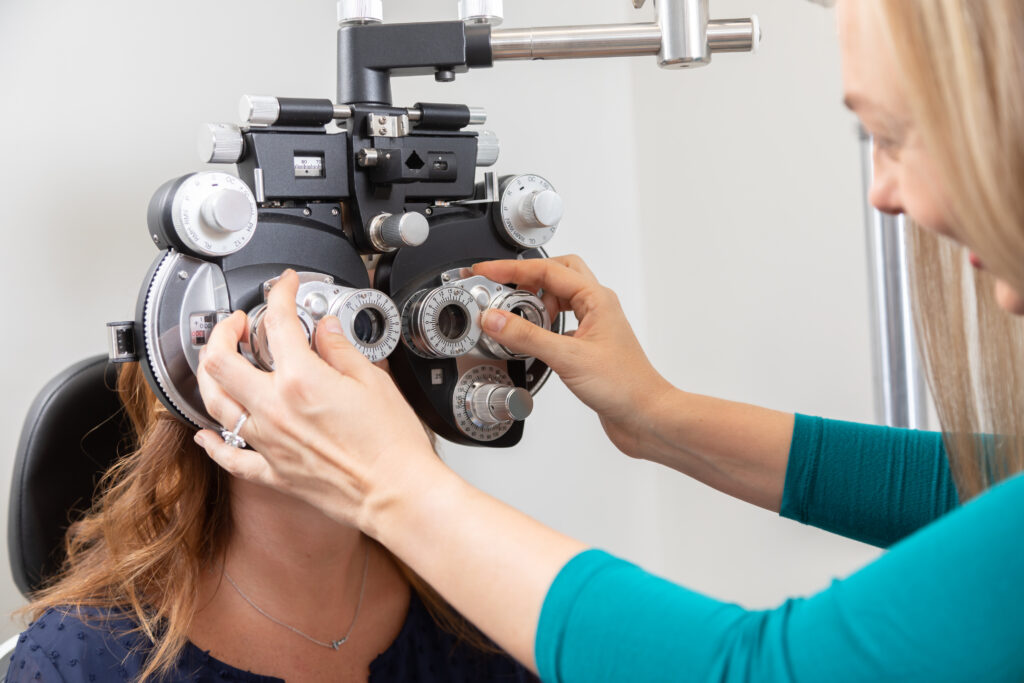
Only a thorough eye exam can confirm whether the ICL will work for you, but good candidates usually share several traits.
In general, the best candidates:
- Are between 21 and 45 years old
- Have moderate to severe nearsightedness, with or without astigmatism
- Have had a stable prescription for at least a year
- Have enough space inside the front of the eye to hold the lens safely
- Have no active eye disease, such as uncontrolled glaucoma or recurring inflammation
Many ICL patients come in after being turned away for LASIK because of thin corneas, irregular corneal shape, or very high prescriptions. Some corneal conditions make laser surgery a poor choice, and your surgeon will look closely at corneal health when deciding whether the ICL is a safer fit.
When EVO ICL May Not Be the Right Fit
The ICL is not the best choice for everyone.
People in their mid-40s and older often begin developing presbyopia, the age-related loss of the ability to focus up close, and the ICL does not correct it.
For these patients, refractive lens exchange may be a better fit, because it replaces the natural lens and can address both distance and near vision.
Women who are pregnant or nursing are usually asked to wait, since hormonal changes can temporarily shift a prescription. An eye with a shallow front chamber, a low count of corneal endothelial cells, or active eye disease may also need a different approach. For people with mild prescriptions, LASIK or PRK may be the better choice.
Your eye doctor at Wilmington Eye will determine which option may be best for you and your vision goals during your consultation.
What Happens During EVO ICL Surgery and Recovery?
ICL surgery is an outpatient procedure that typically takes 20 to 30 minutes per eye.
Your surgeon numbs the eye with drops and inserts the folded lens through a tiny incision at the edge of the cornea. Then, it gently unfolds into position behind the iris. The incision is small enough that it usually heals on its own without stitches. Each eye is often treated on a separate day.
Many patients notice clearer vision within a day or two. Some blurriness, light sensitivity, and mild discomfort are normal early on. You’ll use prescription eye drops for a few weeks and attend follow-up visits so your surgeon can check your eye pressure and healing.
Most people return to work and daily routines within a few days. You’ll need to avoid rubbing your eyes, swimming, and strenuous activity for as long as your surgeon recommends.
The ICL also keeps future treatment options open. Most people eventually develop cataracts as they age. Because the ICL does not change the structure of the eye, the measurements needed for cataract surgery tend to be more reliable later on. When that time comes, the ICL can be removed during the same procedure.
Wondering if the EVO ICL could be your path to clear vision without glasses or contacts? Schedule an appointment at Wilmington Eye in Wilmington, NC, today!