
The 7 Most Common LASIK Myths That Keep People From Visual Freedom
Apr 17, 2026
Despite LASIK’s widespread use and decades of safety data, a surprising number of qualified candidates never take the next step. The reason is almost always the same: misinformation. Myths about pain, permanence, cost, and candidacy have circulated long enough to feel like fact. Here is what the evidence shows.
1. Myth: LASIK Results Wear Off Over Time
This is one of the most persistent misconceptions about the procedure. The truth is that LASIK permanently reshapes the cornea, correcting the refractive errors that caused blurry vision in the first place. Once the cornea is reshaped, it stays that way. The procedure does not “expire.”
What confuses people is the natural aging process. As patients move into their 40s and beyond, the eye’s lens can stiffen, making near vision harder to maintain. This is called presbyopia, and it would happen whether someone had LASIK or not. The surgery is not reversing. The eye is simply aging on its own timeline, and LASIK does not correct age-related refractive errors like presbyopia.
2. Myth: LASIK Is Painful
Fear of pain is one of the top reasons people delay a consultation. The reality is that numbing drops are applied to both eyes before the procedure begins, and most patients report feeling little to no pain during surgery. What some describe is a mild pressure sensation when the laser is at work, but discomfort is minimal and brief.
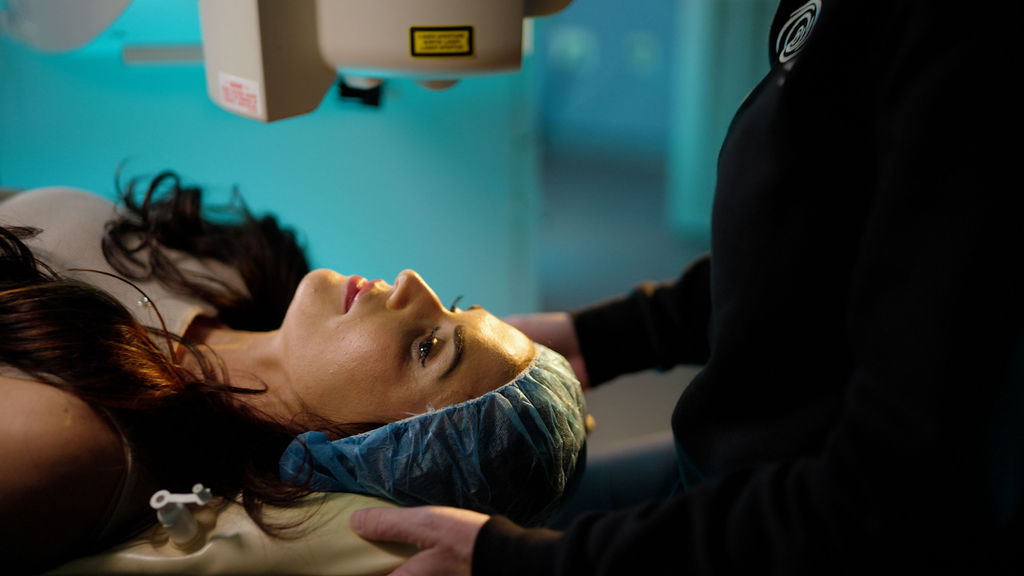
The procedure itself takes less than 15 minutes from start to finish. Most patients notice improved vision within hours of leaving the surgical suite and return to normal daily activities the following day.
The anticipation of pain tends to be far worse than the experience.
3. Myth: LASIK is Unsafe
Few myths create more unnecessary anxiety than this one.
Serious complications from the procedure are extremely rare. In fact, fewer than 1% of patients experience significant side effects, and those that do occur, such as temporary dry eye, light sensitivity, or mild halos, typically resolve on their own over time.
A useful comparison: patients who wear contact lenses are significantly more likely to experience a serious eye infection than someone who has had LASIK. Contacts require daily handling, cleaning, and hygiene discipline. When standards slip, the risk of infection significantly increases, which can result in irreversible damage to your vision. LASIK, performed by experienced surgeons using advanced laser technology, carries a safety profile that far exceeds what most patients expect.
4. Myth: LASIK Is Too Expensive
Sticker shock is understandable when vision correction is priced per eye or bundled in a way that feels opaque. But when patients calculate what they spend annually on glasses, contact lenses, solution, and eye exams over a decade, LASIK often comes out ahead financially, in addition to eliminating the daily inconvenience of corrective lenses.
For patients who want a clearer picture of what to expect, how much LASIK surgery costs in NC depends on factors like the technology used, the surgeon’s experience, and what is included in the fee.
At Wilmington Eye, the comprehensive LASIK fee covers the consultation, all pre-operative exams, the procedure itself, and a full year of post-operative visits with no hidden charges. Patients who need help managing the upfront investment can explore financing options that make monthly payments accessible on almost any budget.
5. Myth: LASIK Can Correct Any Vision Problem
Some people assume LASIK is a universal fix for every vision issue, while others assume they are automatically disqualified without ever getting evaluated. Neither is accurate.
LASIK is highly effective for nearsightedness, farsightedness, and many forms of astigmatism, but it is not a treatment for conditions like glaucoma, cataracts, or macular degeneration.
Candidacy depends on factors including corneal thickness, prescription stability, and overall eye health. Patients who are not good LASIK candidates are not out of options. PRK is a proven alternative for patients with thinner corneas or certain lifestyle risk factors, and the ICL is an excellent option for those with higher prescriptions or dry eye concerns that would make laser surgery less suitable. A comprehensive evaluation is the only way to know which path fits.
6. Myth: LASIK Cannot Correct Astigmatism
Astigmatism is caused by an irregularly shaped cornea, and because LASIK works by reshaping the cornea with a laser, it is well-suited to address many forms of astigmatism directly.
This myth likely persists because older LASIK technology had limitations that modern systems have long since resolved.
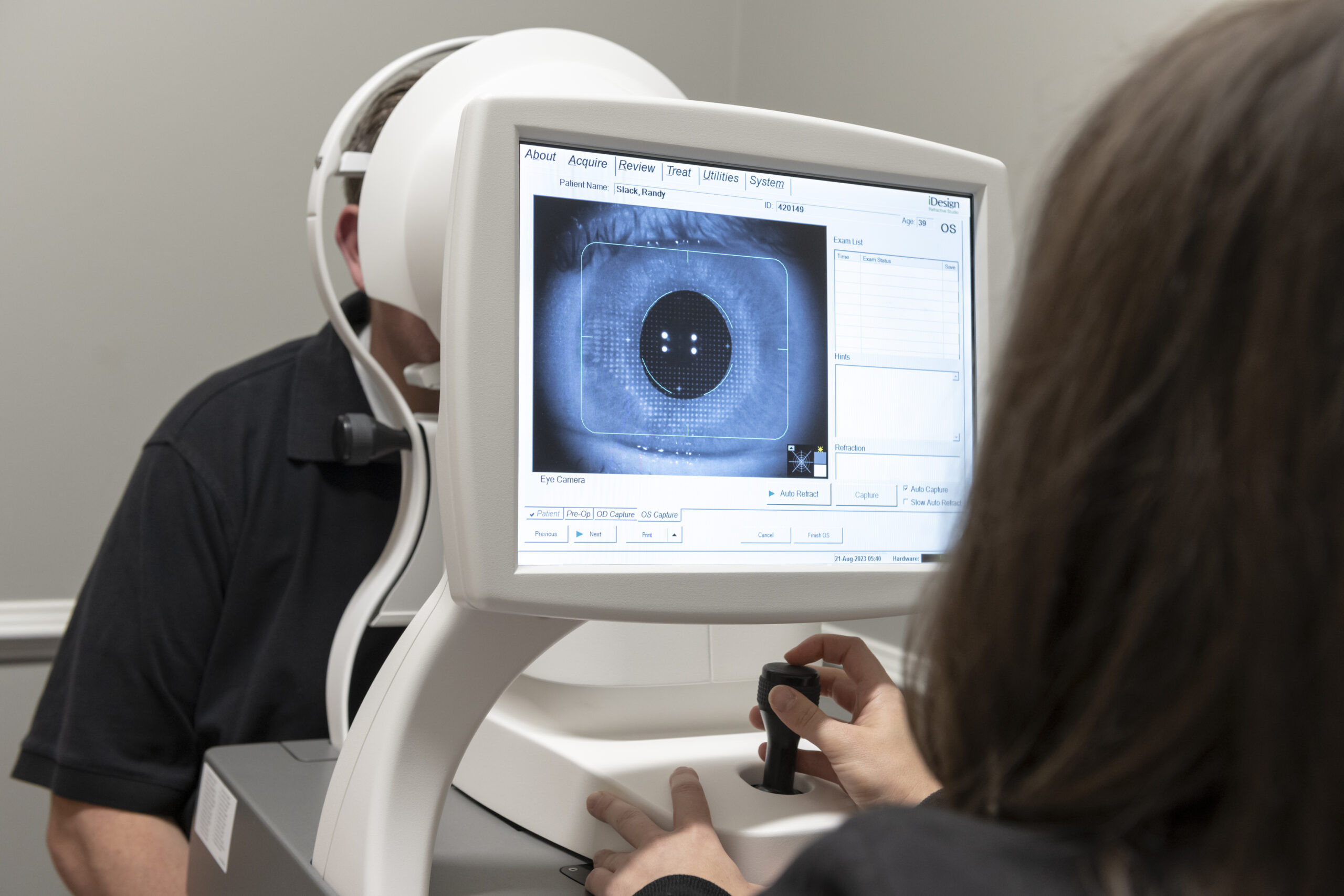
At Wilmington Eye, surgeons use iLASIK technology, which maps the eye in three dimensions before creating a fully personalized treatment plan. That level of precision allows the laser to target specific optical imperfections, including astigmatism, with accuracy that was not possible in earlier generations of the procedure. Many patients who have spent years assuming astigmatism ruled them out are surprised to learn they may qualify.
7. Myth: LASIK Is Only for Young Adults
There is no upper age limit for LASIK, provided a patient meets the standard candidacy criteria.
The key requirement is prescription stability, typically meaning the prescription has not changed significantly in at least one year. That can apply to patients in their 30s, 40s, and beyond.
Where age becomes a relevant factor is in how the conversation around vision correction shifts. Patients in their 40s and 50s who are starting to experience age-related near vision changes may want to weigh whether LASIK alone addresses their full picture, or whether a procedure like refractive lens exchange makes more sense for their long-term goals. But for patients with stable prescriptions and healthy corneas, age alone is not a disqualifier.
Misinformation has kept too many people in glasses and contacts longer than necessary. The technology is proven, the outcomes are strong, and the barriers most patients imagine are far smaller than they appear from the outside.
Ready to find out if LASIK is right for you? Schedule a free pre-screening at Wilmington Eye in Wilmington, NC, and take the first step toward life without glasses or contacts.