Is Dysport Safe for Reducing Wrinkles?
Sep 29, 2026
Dysport has been used in medicine for decades and carries a well-documented safety profile. However, that profile depends heavily on whether you are a suitable candidate and who is holding the syringe.
Keep reading to learn more about Dysport, including how candidacy and provider qualifications factor into safety.
What Is Dysport?
Dysport is the brand name for abobotulinumtoxinA, one of several injectable neurotoxins used to soften fine lines and wrinkles on the upper face.
Every time you laugh, squint, or frown, the muscles beneath your skin contract, and years of that repeated movement can leave creases in the skin behind. Dysport temporarily blocks the nerve signals that tell those specific muscles to contract, allowing the skin above them to relax and smooth out.

Dysport and Botox both come from botulinum toxin type A, but they are not the same. The two products are formulated differently, and providers select between them based on the treatment area and the results a patient is after.
Is Dysport FDA Approved for Treating Wrinkles?
Yes, Dysport received FDA approval in 2009 for treating moderate to severe glabellar lines, which are the vertical creases that form between the eyebrows and are often called frown lines or elevens.
Botulinum toxin type A was actually never developed as a cosmetic product. It was initially created to treat eye muscle disorders, including strabismus and blepharospasm, and it is still prescribed for those conditions today.
Ophthalmologists were injecting it near patients’ eyes for medical reasons years before anyone marketed it for wrinkles, and it has now been in clinical use for more than three decades.
Dysport’s cosmetic indication covers glabellar lines specifically, while Botox is labeled for additional areas such as crow’s feet and horizontal forehead lines.
That distinction is one reason your provider may recommend one product over the other, or use both in a single visit depending on which areas you want addressed.
What Side Effects Are Common After Dysport Injections
Most side effects from Dysport injections are mild and clear up on their own within a few days. The ones reported most often include:
- Headache
- Irritation in the nose or throat
- A reaction at the injection site
- Sinus inflammation
Bruising and mild tenderness at the injection site are common and usually temporary. Your provider can tell you what to expect and when to call.
Less frequently, patients develop an allergic reaction or an upper respiratory tract infection after treatment. Contact your provider if you develop symptoms after treatment. Seek emergency care for signs of a severe allergic reaction, such as difficulty breathing, hives, or swelling of the face, lips, or throat.me
The most serious risk carried by Dysport, and by every botulinum toxin product, is toxin spread. This occurs when the medication affects muscles beyond the treated area. Warning signs include difficulty swallowing or breathing, muscle weakness, blurred or double vision, drooping eyelids, hoarseness, trouble speaking clearly, and loss of bladder control. Toxin spread is rare, but symptoms can become life-threatening, so contact a medical provider immediately if any of them appear.
This is not a complete list of possible side effects. Your provider will review the full prescribing information with you before treatment.
Who Is Not a Safe Candidate for Dysport?
Dysport is not approved for anyone under 18, and clinical studies for cosmetic treatment of frown lines were conducted in adults under 65. It is also not recommended during pregnancy or breastfeeding. Candidacy for any patient is determined during a medical consultation. It should be avoided if you are allergic to any of its ingredients or to cow’s milk protein, if you have reacted to any botulinum toxin product in the past, or if you have an active skin infection where the injections would be placed.
Certain medications and supplements can also interact with neurotoxins, which is why your consultation should include a full accounting of everything you take, prescriptions and over-the-counter products alike.
How to Lower Your Risk of Dysport Side Effects
The largest factor within your control is who performs the injection.
Cosmetic injections are offered in a wide range of settings, and provider training and credentials vary. Asking about a provider’s medical training and experience with the treatment area is a reasonable part of your decision. At Wilmington Eye, injections are administered by board-certified ophthalmologists, fellowship-trained oculoplastic surgeons, and experienced physician assistants who work in the muscles and tissue around the eyes daily.
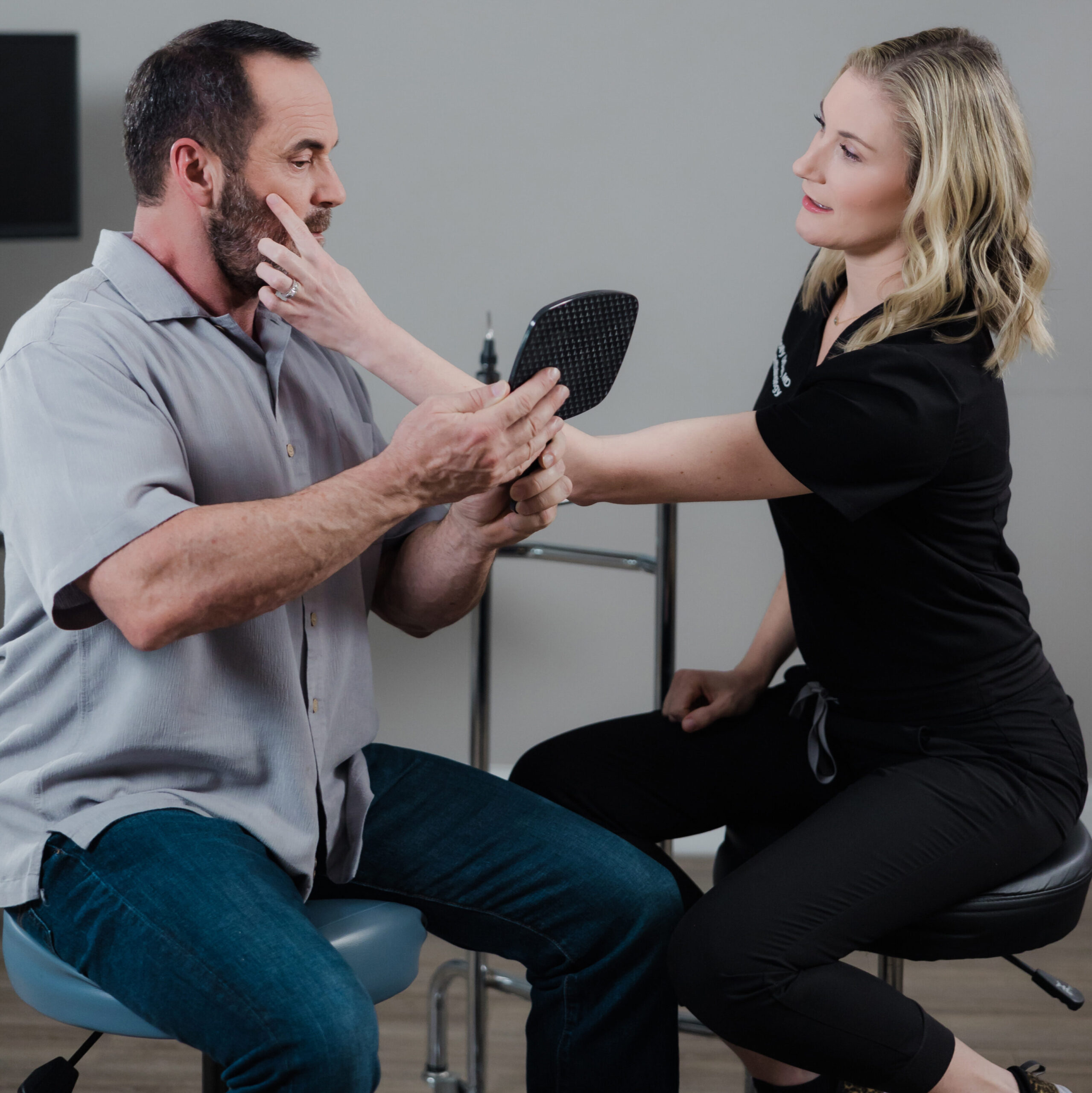
Familiarity with the anatomy of the brow and eyelid is particularly relevant in the area Dysport treats, where the surrounding muscles sit close together. The full range of cosmetic treatments comes from that same team, so the provider injecting you may well be the one already managing your medical eye care.
There are a handful of practical steps you can take to further reduce your risk. Arrive with a clean face, since the injection site gets wiped with alcohol beforehand. Skip exercise for the rest of the day, because increased blood flow to the face can interfere with how well the product settles into the intended muscles. That evening, avoid pressing or scrubbing the treated area, and set aside micro-needling devices, jade rollers, and gua sha tools until your provider clears you to use them again.
Your provider will give you a full list of instructions to follow to ensure you achieve satisfactory results and maintain safety.
Wondering whether Dysport is a safe option for softening your wrinkles? Schedule an appointment at Wilmington Eye in Wilmington, NC, today!