7 Effective Ways to Find Relief From Dry Eye
Aug 21, 2026
For the millions of people who deal with dry eye symptoms, relief usually comes from a handful of consistent changes that work together to protect your tear film. Some solutions are habits you can begin at home today, while others involve in-office treatments that target the root cause of your symptoms.
Keep reading to find seven proven strategies, moving from simple everyday adjustments to advanced therapies your eye doctor can provide.
What Dry Eye Feels Like and Why It Happens
Dry eye happens when your eyes cannot make enough tears or when the tears they produce evaporate too quickly.

In addition to keeping your eyes lubricated, tears wash away debris, reduce the risk of infection, and create the smooth surface your eyes need to focus clearly. When that balance is off, you may notice burning, redness, grittiness, or a tired ache that builds as the day goes on. Watery eyes are common as well because irritation can trigger a flood of low-quality tears that never fully coat the surface.
Several factors can push tear production out of balance, including aging, hormonal shifts, certain medications, autoimmune conditions, and long hours on digital screens. Wind, sun, and air conditioning can add to the strain.
Because dry eye can stem from many different causes, the right relief plan starts with knowing what is driving your particular symptoms.
1. Adjust the Air Around You
The environment you sit in all day has a direct effect on how your eyes feel.
Ceiling fans, car vents, and forced-air heating blow across the eye surface and speed up tear evaporation, so angling vents away from your face can make a noticeable difference. A humidifier adds moisture back into dry indoor air, which is especially helpful in winter or in rooms with strong air conditioning. Wraparound sunglasses shield your eyes from wind and sun when you are outdoors, and stepping away from smoke or heavy dust gives your tear film a chance to recover.
2. Give Your Eyes Regular Screen Breaks
Screens are one of the most common triggers of modern dry eye, and the reason is simple. When you stare at a phone, monitor, or television, your blink rate drops sharply. Blinking is what spreads a fresh layer of tears across your eyes, so fewer blinks mean a drier, more irritated surface by the end of the day.
A helpful habit is the 20-20-20 rule. Every 20 minutes, look at something about 20 feet away for at least 20 seconds. This short pause gives your eyes a chance to reset and encourages a full, complete blink. Lowering your screen slightly below eye level also helps, because your eyelids cover more of the surface when you look downward.
Small adjustments to your workspace add up over a long day. Reducing glare, increasing text size, and keeping the screen at arm’s length all ease the effort your eyes put into focusing, which in turn reduces the strain that makes dry eye worse.
3. Reevaluate Your Contact Lens Routine
Contact lenses can worsen dryness because they rest on the tear film and absorb some of the moisture your eyes rely on. If your eyes feel dry by evening, talk with your eye doctor about whether your contact lenses are the right fit. Adjustments like switching to daily disposable lenses, adjusting your wearing schedule, or building in lens-free days may improve your dry eye symptoms. People with significant dry eye are sometimes better served by glasses during flare-ups, and your provider can help you weigh the options.
4. Support Your Tear Film Through Diet and Hydration
What you eat and drink influences the quality of your tears.
Omega-3 fatty acids, found in salmon, sardines, walnuts, flaxseed, and fish oil supplements, support the oily layer of the tear film that keeps tears from evaporating too fast. Many patients notice steadier comfort after making these foods a regular part of their diet.
Also, remember to stay hydrated. When your body is low on fluids, tear production is one of the first things to suffer, so drinking water consistently through the day helps your eyes hold the moisture they need. Cutting back on alcohol and caffeine, both of which are dehydrating, can further protect against dryness.
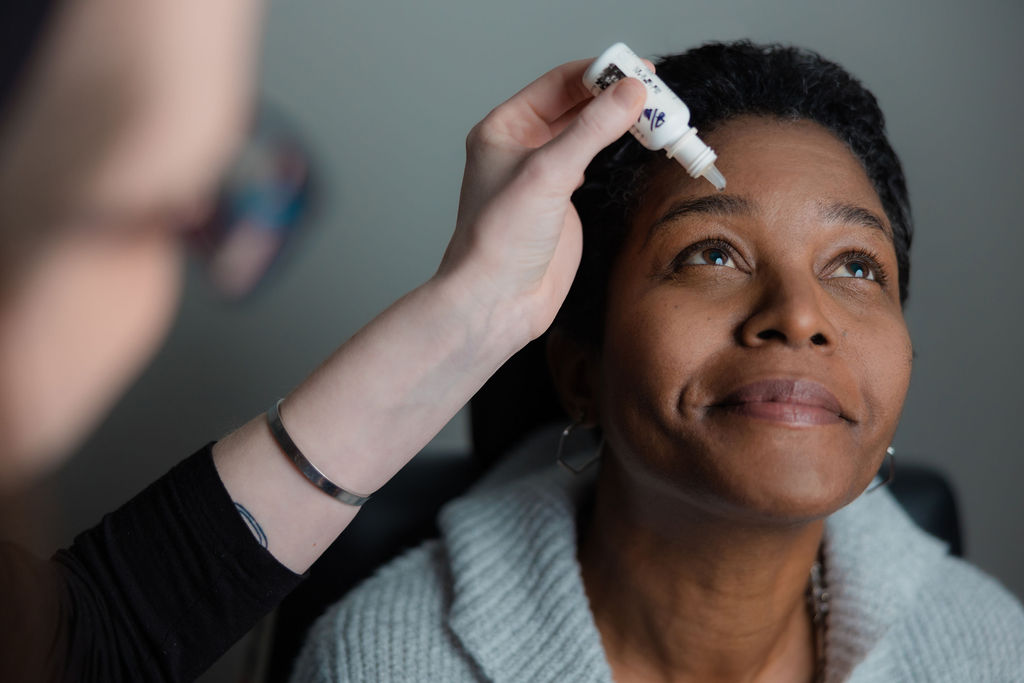
5. Use Artificial Tears the Right Way
Over-the-counter artificial tears are the first line of defense for most people, and using them correctly makes a difference. Preservative-free drops are gentler for frequent use, and applying them before symptoms peak keeps your eyes more comfortable than waiting until they are already irritated. If you find yourself reaching for drops all day with little lasting relief, that is a sign to schedule a comprehensive eye exam so your eye doctor can look past the symptoms and identify the underlying cause.
6. Keep Your Eyelids Clean With Warm Compresses
For some people, dry eye traces back to the eyelids rather than the eye itself.
Tiny oil glands along the lid margin, called meibomian glands, release the oil that keeps tears from evaporating. When these glands become clogged or the lids collect debris and bacteria, dryness and irritation follow.
A warm compress held gently over closed eyes for several minutes helps soften and release the oils in these glands, while cleaning the lash line removes the buildup that leads to inflammation.
For stubborn cases, a cornea specialist can evaluate the health of your glands and lids and recommend targeted care that goes beyond what a home routine can achieve.
7. Ask Your Eye Doctor About In-Office Dry Eye Treatments
When daily habits and over-the-counter products are not enough, professional treatment can address the root of the problem.
Wilmington Eye offers several in-office dry eye treatments designed to deliver relief that lasts well beyond the appointment itself.
These options include iLux and LipiFlow, which use gentle heat and pressure to clear blocked meibomian glands, and BlephEX, which deep-cleans the eyelids to remove the debris that fuels irritation. Intense Pulse Light therapy, or IPL, targets the inflammation that drives many cases of dry eye and is the only device of its kind FDA-approved for this purpose. Most of these procedures take only a few minutes and require no downtime.
Punctal plugs are another option for some patients. These tiny, removable inserts slow the drainage of tears from the eye, keeping natural moisture on the surface longer.
The right combination of treatments depends on what is causing your symptoms, which is why an evaluation with an experienced provider is the surest path to lasting comfort.
Want to find dry eye relief that actually lasts? Schedule an appointment at Wilmington Eye in Wilmington, NC, today!