
How Soon After LASIK Can I Return to Work?
May 1, 2026
For most people considering LASIK, the surgery itself isn’t the scary part; it’s the logistics afterward. Taking time off, arranging a ride home, and figuring out when to return to your desk or job site are all things many people wonder about once they schedule the procedure.
LASIK has one of the shortest recovery timelines of any elective surgery, and the majority of patients are back to their normal routines within a day or two. How quickly that happens, though, depends largely on what your work actually looks like.
What Happens to Your Eyes in the First 24 Hours After LASIK
The hours immediately following LASIK are the most important for your recovery. Most patients experience blurry or hazy vision, significant light sensitivity, tears, and a sensation of grittiness or mild irritation.
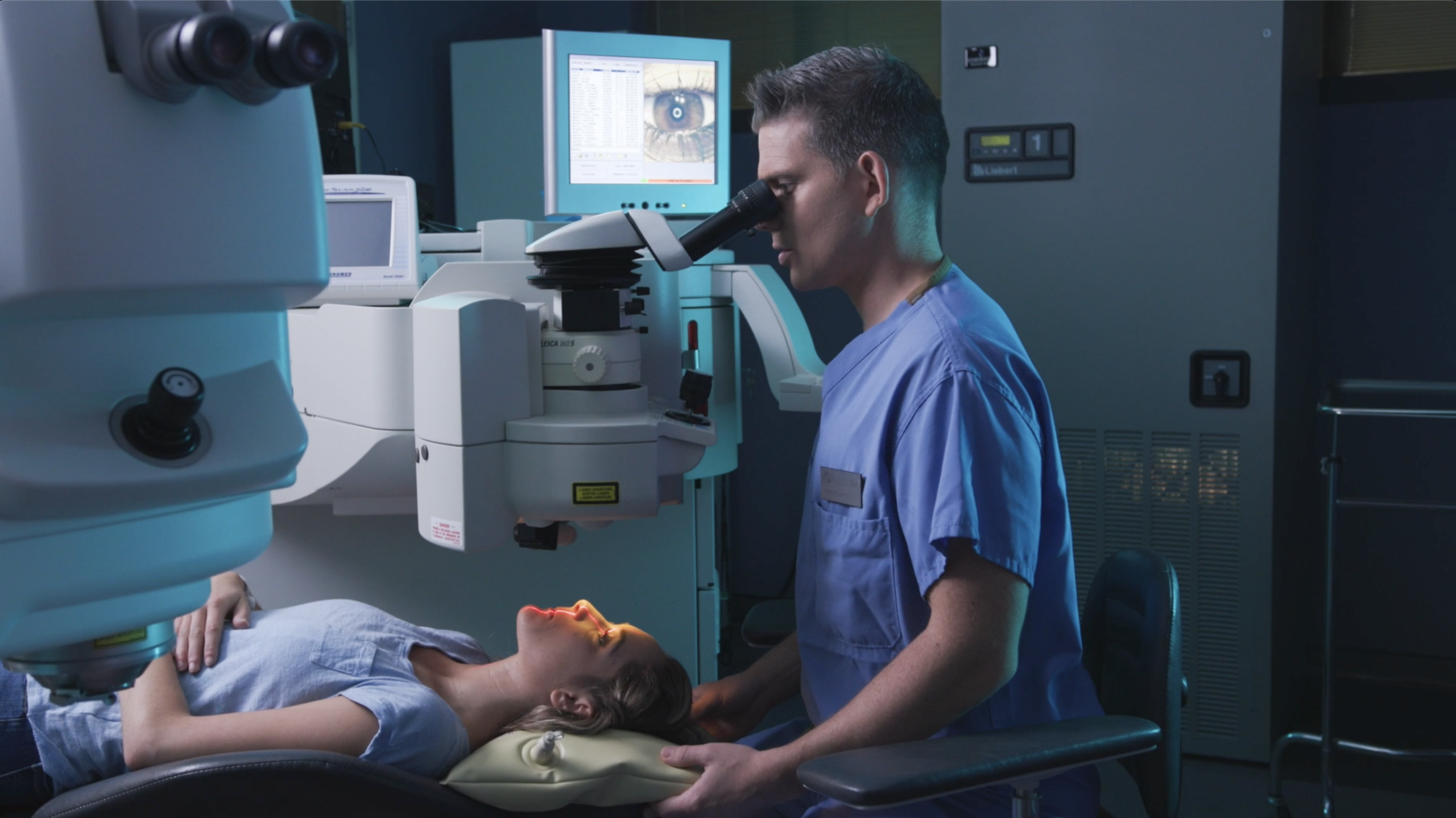
These symptoms are normal and typically begin to ease within a few hours as the corneal flap starts to heal.
Your surgical team will give you protective eye shields to wear, along with a schedule for prescription eye drops to prevent infection and manage inflammation.
Sleep is one of the most effective things you can do on the day of surgery, as it keeps your eyes closed and protected during the critical early healing window. Almost no one returns to work on the day of their procedure, regardless of job type, and patients should plan for a full day of rest.
When Most Patients Can Return to an Office or Desk Job
Patients with office-based jobs that involve primarily sitting, reading, and working at a computer are typically cleared to return to work within one to two days after LASIK. The key milestone is the morning-after follow-up exam, which is usually scheduled for the day after surgery. At that appointment, the surgical team checks the position of the corneal flap, assesses healing, and confirms that your vision has stabilized enough to resume normal activity.
Most patients are genuinely surprised by how functional their vision is by day two. It won’t necessarily be perfect yet, as vision can continue to sharpen over the following weeks, but it’s usually more than adequate for a standard workday.
Patients who pass their follow-up exam without any concerns are generally given the green light to return to low-demand work environments on the same day.
LASIK Recovery and Physically Demanding Jobs
Patients whose jobs involve physical labor, outdoor exposure, or environments where the eyes are at risk need to plan for more time away.
Construction workers, landscapers, warehouse workers, nurses, first responders, and others with active or hands-on roles typically need to wait longer before returning to work, often between three and seven days, depending on job conditions.
The concern isn’t pain. Most patients feel quite good within a day or two. The concern is exposure. Dust, debris, and airborne particles can irritate or contaminate the healing cornea. Jobs that require bending, lifting, or physical exertion increase the risk of accidentally rubbing or bumping the eyes, which can disturb the corneal flap in the early healing phase. Professions that require protective goggles or face masks may also create pressure or contact with the eye that isn’t appropriate during the first week of recovery.
If your job involves any of these conditions, be upfront about it during your pre-surgical consultation. The team at Wilmington Eye will give you specific guidance based on your role so you know exactly when it’s safe to go back.
How Your Follow-Up Appointment Guides Your Return
The day-after appointment is the checkpoint that determines when you can resume specific activities, including work. At this visit, your surgeon will assess how well the cornea is healing, check your visual acuity, and look for any signs of complications. Based on those findings, you’ll receive personalized clearance for driving, screen use, physical activity, and return to work.
This is also the appointment where patients get answers to the questions that came up overnight. It’s a good idea to write down anything you notice after surgery, like unusual symptoms, concerns about your vision, or questions about your drops, so nothing gets overlooked. Ongoing adult eye care after LASIK includes additional follow-up visits at one week, 6 weeks, 3 months, and 6 months after surgery, giving your care team multiple opportunities to confirm that healing is progressing as expected.
LASIK vs PRK Recovery and What It Means for Work
Patients who are not candidates for LASIK are sometimes offered PRK as an alternative. Both procedures correct the same refractive errors, but the recovery timelines are meaningfully different, particularly in the early weeks.

With PRK eye surgery, the outer layer of the cornea is removed rather than a flap being created, which means the surface needs to regenerate before vision stabilizes. Most PRK patients experience blurred vision for several days and aren’t cleared for desk work until around day five to seven, with full visual stabilization taking several weeks longer than LASIK.
If return-to-work timing is a major consideration for you, it’s one of the factors worth discussing when you review your candidacy.
For most patients, LASIK offers one of the fastest routes back to normal life after vision correction surgery. With a little planning around your specific job demands and a clear understanding of what the first few days involve, most people find the recovery far easier and shorter than they expected.
Ready to find out if LASIK is right for your vision and your lifestyle? Schedule an appointment at Wilmington Eye in Wilmington, NC, today!